
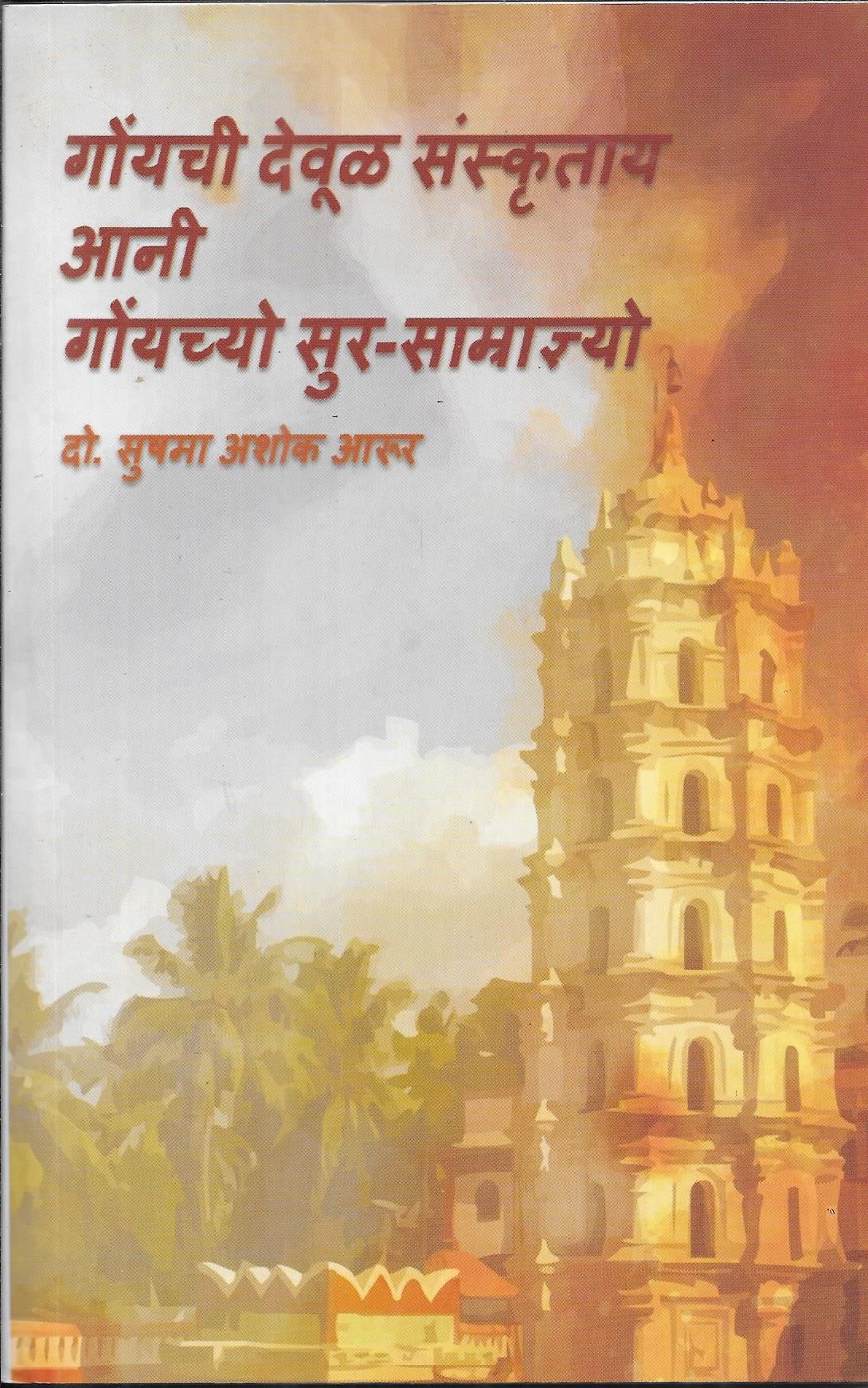
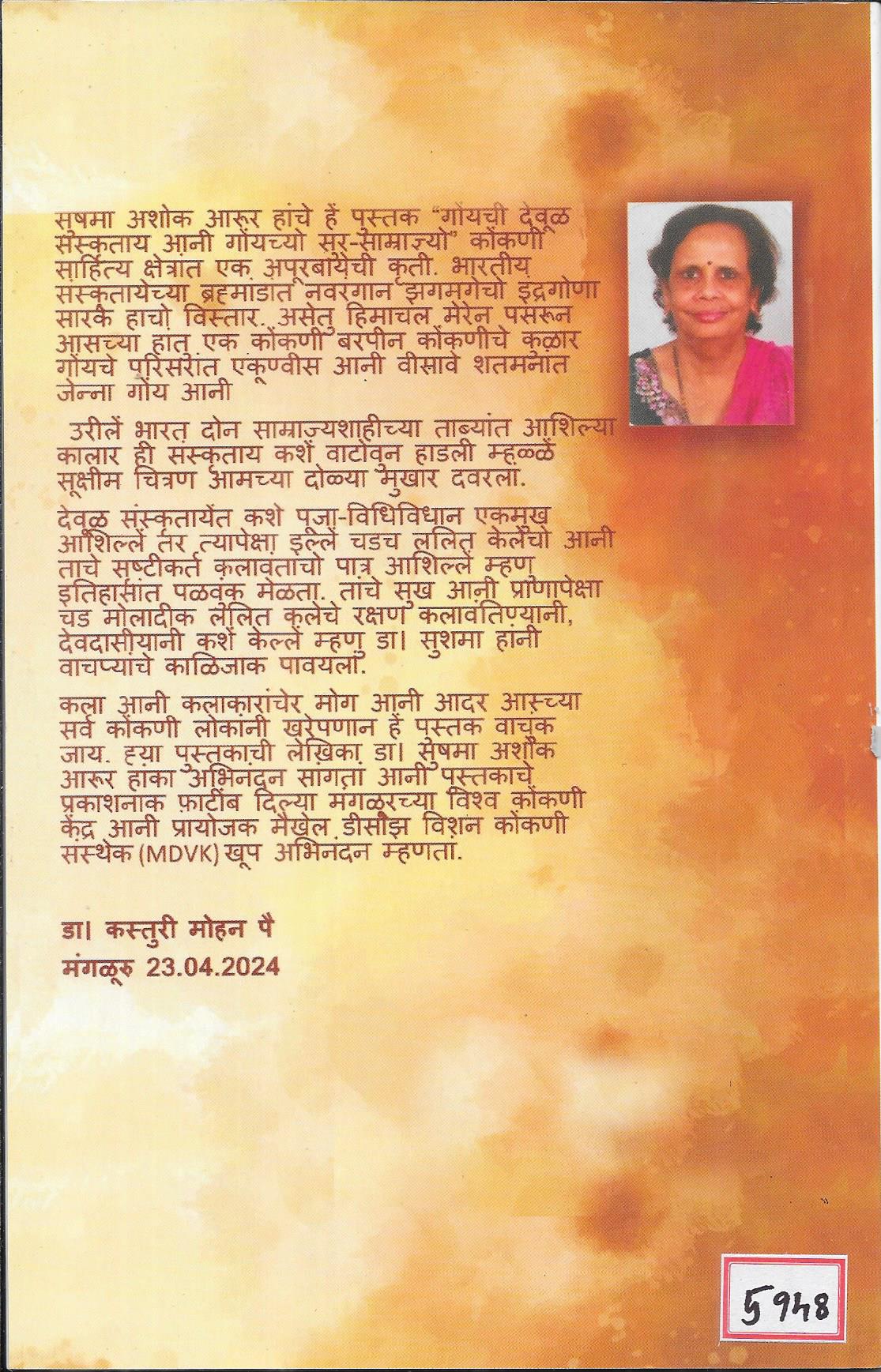
Goemchi Devul Sanskrutay Ani Goemchi Sur Samradnyo
Author: Sushma Ashok Arur Publisher: Sushama Arur Pages: 152 Book Cover: Softcover₹200
This historical non-fiction sheds light on the temple culture of Goa, its entire eco-system and the Devadasis. They suffered from social pressure and Portuguese exploitation. They left home adapted new places, worked hard to learn Hindustani classical music and succeeded. They also preserved the rich heritage for posterity.
| Weight | 216 g |
|---|---|
| Language |
Related products
-
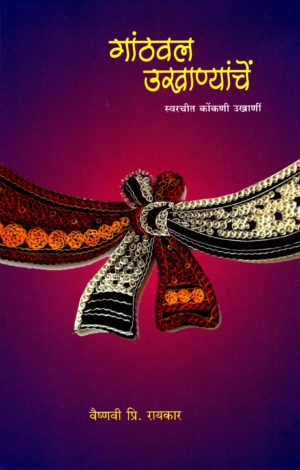
Gathaval Ukhanyachem
₹120Ukhani contributed from Vaishnavi Raikar. Almost 180 terms of ukhani from different part of Goa. Mostly use in marriage ceremonies and ‘Dhalo’ performance at the Mand.
-
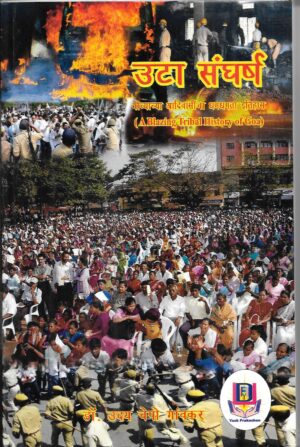
UTAA Sangharsha
₹425The book is about blazing tribal history of Goa. It includes famous Balli Andolan at Balli. Historical morcha on Vidhansabha for twelve demands of UTAA.
-
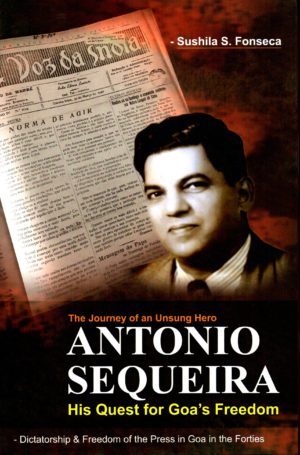
The Journey of an Unsung Hero Antonio Sequeira- His Quest for Goa’s Freedom
₹599A biography of Antonio Sequeira a die-hard nationalist. In the forties, in his quest for freedom, without expectation of any recompense, as editor of- A Voz da India Antonio used the pen despite strict censorship, to awaken his people against Goa’s autocratic Salazarist governance.
-
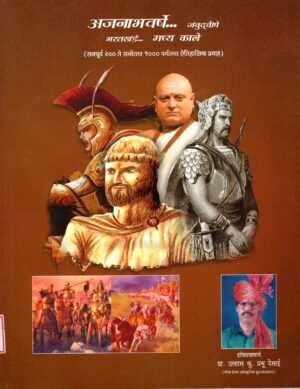
Ajanabhavarshe… Jambudwipe… Bharatkhande… Madhya Kale
₹250History of India from 200 B.C. to 1000 A.D. regarding historial, political, cultural trends.
-

Reckoner of Cudnem Village
₹499“The book gives a profile of the village which is in a rural set-up in Bicholim Taluka. This book is an attempt to collect and analyse
primary data from the field of Cudnem village. It also helps in understanding the unemployment and other problems of
Cudnem village in Bicholim taluka.” -

The Goa Inquisition: The Terrible Tribunal for the East
₹695This book presents a dispassionate and objective account of the Inquisition against the background of the religious policy of the Portuguese. It is based on authentic archival documents and correspondence of the Jesuits. Dr. Dellon’s experiences as a prisoner are also reprinted at the end.
-
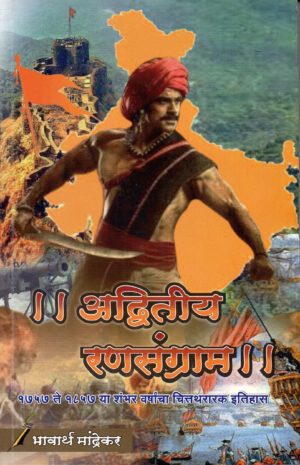
Advitiya Ransangrama
₹360This historical work emphasis 100 years matchless sacrifice made by Indian patriots from 1757 to 1857 against British Colonial rule. It contains 10 main topics and 28 sub topics. This is first ever epics book released from Goan soil on Indian National history. Thousand prints of this book were sold in just ten days after its release.
-
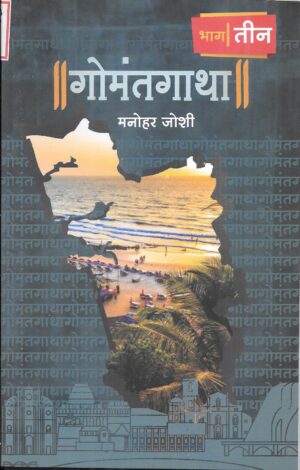
Gomantgatha Part -3
₹200Gomantgatha Part-3, book is the third part of Goan history and Goan freedom movement. Goan history is so vast that it is described in three parts of this book, in short.